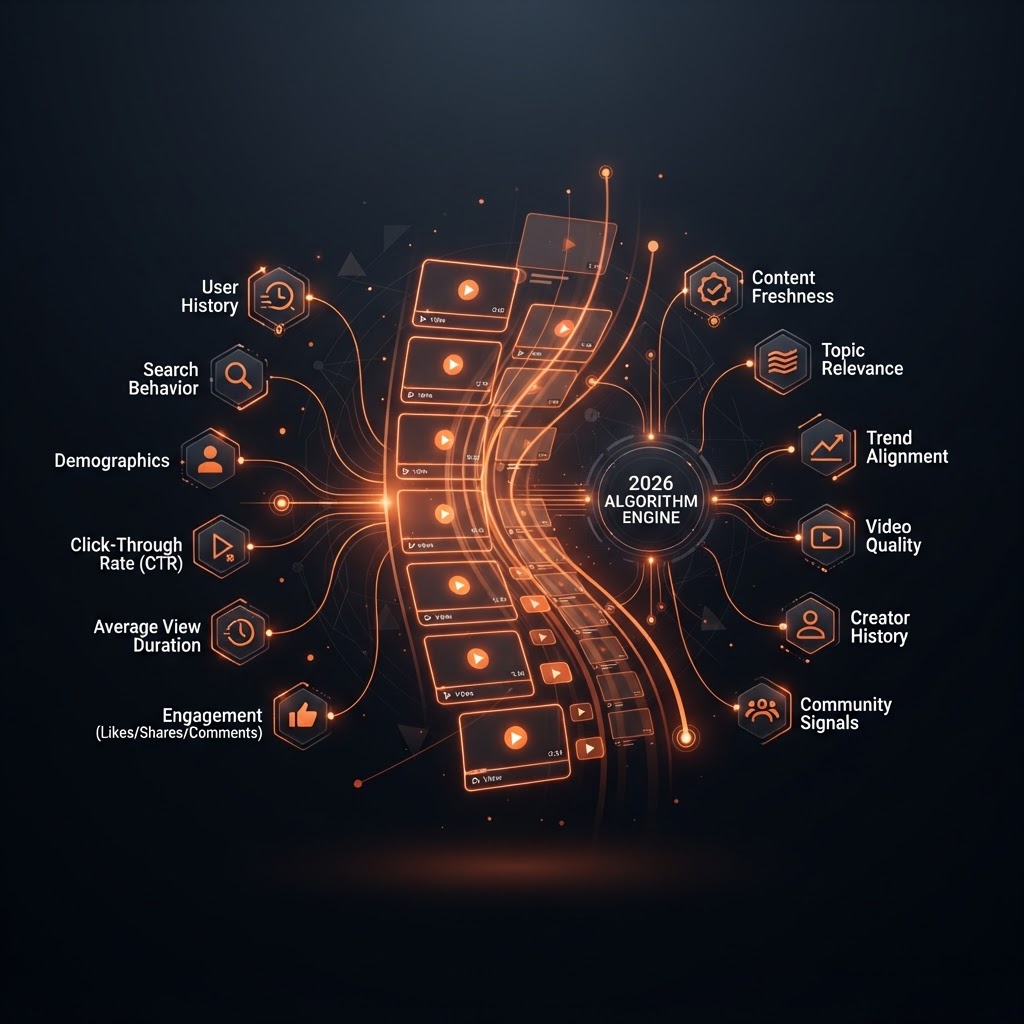
Navigating the YouTube platform in 2026 requires a fundamentally different mindset than it did just a few years ago. The modern youtube algorithm 2026 is no longer a simplistic mechanical system relying solely on video titles, primitive tag matching, or isolated click-through rates. Instead, YouTube has evolved into a hyper-sophisticated, multi-modal neural recommendation system powered by advanced artificial intelligence. This platform processes billions of data points every second to map out individual viewer journeys, predict user gratification, and surface content that maximizes long-term platform retention.
For independent creators, musicians, video producers, and digital entrepreneurs, understanding this algorithm shift is not optional—it is the single factor that separates thriving channels from invisible ones. Whether your goal is to grow a music channel featuring immersive AI music mixes, build a viral lyric video showcase, or construct an automated video production business, mastering youtube seo and recommendation triggers is your growth engine.
In this definitive master guide, we will break down the exact mechanics of how YouTube’s recommendation engine operates in 2026, detail the key youtube ranking factors, reveal how cutting-edge AI content creation platforms like Jutoka enable creators to produce high-retention video assets effortlessly, and provide a battle-tested roadmap to get recommended youtube consistently in YouTube’s “Suggested Videos” and “Home Feed” surfaces.
Key Takeaway for 2026 Creators
The YouTube algorithm doesn’t rank videos in a static vacuum; it follows the audience. Your job isn’t to trick an algorithm—it is to build highly engaging, visual, and auditory experiences that keep viewers on YouTube longer. Tools like Jutoka AI Music Generator give creators the creative horsepower to pump out algorithm-friendly assets at scale.
1. The Evolution of the YouTube Algorithm in 2026
To succeed today, creators must understand how YouTube’s machine learning architecture has transformed. Historically, YouTube prioritized raw view counts, followed by total watch time, and later, Click-Through Rate (CTR) combined with Average Percentage Viewed (APV). While CTR and retention remain vital, the 2026 architecture introduces deep neural semantic mapping and multi-modal scene analysis.
1.1 From Keywords to Semantic Topic Graphs
YouTube’s AI no longer reads metadata in isolation. It utilizes deep semantic parsing to analyze video scripts, audio tracks, visual imagery, and viewer commentary as a cohesive contextual ecosystem. When you upload a video, YouTube’s multi-modal AI immediately transcribes the audio, detects objects and visual styles within frames, analyzes audio mood dynamics, and categorizes your upload within a complex vector graph of creator content.
This means stuffing your description box with keywords like youtube algorithm 2026 or get recommended youtube without providing cohesive, valuable content will lead to immediate algorithmic suppression. The algorithm evaluates whether the promised value in your thumbnail and title matches the visual and acoustic reality of your video.
1.2 Deep Neural Video Analysis: Visual and Acoustic Fingerprinting
In 2026, YouTube employs vision transformers that analyze every frame of your video during processing. The system detects motion pacing, lighting changes, color schemes, visual clutter, and thumbnail-to-video visual consistency. If your thumbnail promises an aesthetic lo-fi chill study room with warm lighting, but your video consists of static, low-quality slideshows, the neural engine registers a visual mismatch, predicting rapid viewer bounce.
Furthermore, audio tracks are analyzed for frequency spectrum balance, dynamic range, rhythm, and acoustic mood. Higher fidelity audio correlates directly with extended session durations, especially in ambient, music, and lyric video niches. This is why platforms like Jutoka focus on generating studio-grade, losslessly rendered audio stems designed for maximum retention.
1.3 Real-Time Personalization and Session Context
The recommendation system operates on a real-time feedback loop. Rather than ranking videos on a static daily leaderboard, YouTube crafts a custom, dynamic feed for every single user based on their immediate viewing history over the past 30 to 60 minutes. If a user spends 15 minutes listening to a synthwave music track, YouTube immediately tests similar ambient or lyric music videos in their Home feed. Creators who publish consistent, topical content series are primed to capture these instant recommendation slots.
2. Top YouTube Ranking Factors in 2026
While YouTube evaluates hundreds of micro-signals, six primary ranking factors dominate the recommendation engine in 2026. Mastering these core metrics is essential for getting your videos pushed to thousands or millions of targeted viewers.
2.1 Relative Audience Retention and Hook Optimization
Average Percentage Viewed (APV) measures how much of your video a viewer watches on average. However, in 2026, YouTube places heavier weight on Relative Audience Retention—how well your video retains viewers compared to all other videos of similar length in your specific niche.
The first 30 seconds of your video (the “Hook Phase”) remain the most critical window. If 70% or more of your audience remains past the 30-second mark, the algorithm flags your content as high-gratification and initiates wider distribution tests. Utilizing dynamic visuals, automated kinetic captions, and rhythmically aligned AI background music created with Jutoka Lyric Video Maker prevents early viewer drop-off dramatically.
2.2 Click-Through Rate (CTR) and Dwell Time Dynamics
CTR represents the percentage of impressions that turn into actual video views. In 2026, YouTube measures CTR in conjunction with “Dwell Time”—preventing clickbait by evaluating whether viewers stay for at least 60 to 90 seconds after clicking. High CTR combined with high early retention creates an algorithmic flywheel effect.
To maximize visual resonance and thumbnail CTR:
- Use high-contrast visual elements and clear focal points. Incorporate vibrant brand accents like deep orange (#F28546) to build visual recognition across your channel uploads.
- Ensure thumbnail typography is legible on mobile devices, which account for over 75% of YouTube consumption.
- Align title emotional framing directly with the visual promise of the thumbnail.
- Avoid visual noise: clean, bold imagery with 2 to 4 distinct visual layers consistently outperforms cluttered graphics.
2.3 Viewer Gratification Signals (Implicit and Explicit Feedback)
YouTube measures viewer satisfaction through both explicit actions (surveys, likes, shares, comments, playlist additions, super thanks) and implicit signals (rewinds, re-watches, comment sentiment analysis). A video with 1,000 likes and 200 enthusiastic comments will consistently outrank a video with 10,000 passive views and zero viewer interaction.
Explicit YouTube satisfaction surveys pop up directly on users’ feeds asking, “How was this video?” with 1 to 5 stars. YouTube trains its core neural networks on these survey responses. Videos that produce positive emotional resonance—such as relaxing AI music mixes or visually mesmerizing lyric videos—score highest in user surveys.
2.4 Session Duration and Binge Chains
YouTube’s primary business model relies on keeping users on the platform. If your video serves as the starting point for a long YouTube session—or if a viewer watches 3 or 4 of your videos consecutively—YouTube rewards your channel with massive algorithmic distribution. Creating playlist-friendly content, such as continuous 1-hour AI music mixes or themed lyric video compilations, is one of the fastest tactics to inflate session duration.
2.5 Audio Quality and Acoustic Retention
An underrated factor in 2026 is acoustic analysis. AI content systems detect audio fidelity, background noise level, volume normalization, and musical engagement. Audio tracks with inconsistent volume spikes cause immediate viewer exit. High-fidelity audio produced via specialized creation platforms ensures crisp, professional frequency balance that keeps audiences listening for hours.
2.6 Cross-Platform Signals and External Velocity
YouTube closely monitors referral traffic coming from external websites, messaging apps, and social networks like TikTok and Instagram. When a newly published YouTube video receives a surge of external views within its first 6 hours, YouTube treats this as a strong social endorsement signal, triggering an immediate test push to broader internal recommendation pools.
3. The Dual Recommendation Engine: Home Feed vs. Suggested Videos
Understanding where your traffic originates is critical for tailoring your content strategy. The 2026 recommendation engine operates across two primary discovery surfaces, each requiring specific optimization techniques.
3.1 Unpacking the Home Feed Discovery Engine
The Home Feed is YouTube’s exploration surface. It is designed to expose users to new topics, trending formats, and personalized interests. When your video lands on the Home Feed, it is competing against content from channels the user is already subscribed to, as well as viral videos across the entire platform.
To win on the Home Feed:
- Focus heavily on high-curiosity titles that appeal to broader human emotion or high-demand trends.
- Design thumbnails with ultra-clear visual hierarchy and contrasting color accents like #F28546.
- Ensure your video hook immediately delivers on the thumbnail’s core premise within 5 seconds.
3.2 Dominating the Suggested Videos Sidebar
Suggested Videos appear on the right side of the desktop screen, below the video on mobile devices, and as autoplay next up videos. Traffic from Suggested Videos is often far more stable and long-lasting than Home Feed spikes because it taps into evergreen viewer habits.
To dominate Suggested Videos:
Suggested Video Optimization Blueprint
1. Topic Mirroring: Create content that directly complements popular videos in your niche (e.g., if a competitor’s “Lofi Hip Hop Study Mix” is trending, create a “1-Hour Cyberpunk Chillhop Mix for Coding” using Jutoka AI Music Generator).
2. Visual Consistency: Match the visual mood and thumbnail aesthetic of the category leader while maintaining distinct brand elements.
3. Playlist Linking: End every video with an explicit call-to-action and end-screen card driving viewers to your next related video in a curated playlist.
3.3 Semantic YouTube SEO & Search Intent Matching
While recommendations drive 80%+ of views on YouTube, search traffic provides the foundational momentum that triggers recommendations in the first place. When a new channel publishes a video, the algorithm lacks historical data. Search traffic acts as the initial validation pool where YouTube gathers early CTR and retention metrics.
Target long-tail, high-intent keywords such as youtube algorithm 2026, youtube seo strategy, and how to get recommended on youtube in your video titles, descriptions, and pinned comments to secure consistent search velocity.
4. High-Yield Content Formats Dominating the 2026 Algorithm
Not all video formats perform equally under YouTube’s current recommendation criteria. Specific content structures naturally generate higher watch times, better retention curves, and stronger replay rates. Let’s examine the four highest-performing video formats in 2026.
4.1 AI Music Mixes (Lo-Fi, Synthwave, Gym Phonk, Ambient)
Music channels represent one of the most scalable and lucrative niches on YouTube. Viewers play music mix videos in the background while studying, working, exercising, or relaxing. This results in extraordinarily long average watch times (often 20 to 45 minutes per session), which sends overwhelming retention signals to YouTube’s neural algorithm.
Creating these mixes previously required expensive audio licensing and hours of manual DAW editing. With Jutoka AI Music Generator, creators can generate original, multi-track AI music streams in minutes, perfectly mixed and mastered for YouTube publishing without copyright strike risks.
4.2 Dynamic AI Lyric Videos and Animated Visualizers
Lyric videos have experienced a massive resurgence in 2026. Musicians, beatmakers, and channel owners use dynamic, animated typography overlaying high-definition AI-generated video backdrops to keep audiences visually transfixed. The synchronized motion of lyrics matching the vocal audio track creates continuous visual stimulation, drastically reducing drop-offs during verse-chorus transitions.
Platforms like Jutoka Lyric Video Maker automate the transcription, kinetic text timing, background synthesis, and rendering, enabling creators to publish professional music video content in a fraction of the traditional production time.
4.3 AI Storytelling & Faceless Niche Channels
Faceless educational and narrative channels—covering history, futuristic technology, personal finance, and mythology—continue to dominate recommendation feeds. By pairing AI-generated scripts with high-definition visual clips generated via Jutoka AI Video Generator, solo creators can run media networks that rival traditional studio output.
4.4 Short-to-Long Form Funnels (YouTube Shorts Integration)
YouTube Shorts acts as the ultimate subscriber acquisition funnel in 2026. Shorts algorithmically distribute to millions of casual scrollers daily. By linking a Short directly to a long-form YouTube video (such as a 15-second teaser of a lyric video linking to the full 3-minute video or 1-hour mix), creators drive high-intent, targeted viewers directly into their long-form retention engine.
5. How AI Content Creation Tools Revolutionize YouTube SEO
Generative artificial intelligence has transformed YouTube creation from a labor-intensive manual grind into a strategic, streamlined workflow. However, leveraging AI tools effectively requires understanding how to maintain artistic quality and uniqueness to avoid generic spam flags.
5.1 Automated Scriptwriting and Semantic Metadata Generation
AI language models allow creators to brainstorm video angles, draft hooks, and generate metadata optimized for semantic search engines. When optimizing metadata, incorporate your core keywords naturally within the first 100 words of your video description:
- Primary Keyword: youtube algorithm 2026
- Secondary Keyword: youtube seo
- Long-tail Keywords: get recommended youtube, youtube ranking factors
5.2 High-Fidelity AI Audio Composition
Traditional royalty-free music platforms offer generic, overused tracks that diminish viewer engagement. Modern AI audio generators produce custom compositions tailored to exact mood parameters, tempo shifts, and frequency ranges. High audio clarity directly increases viewer retention, encouraging repeat plays and longer session durations.
5.3 Automated Visual Asset Synthesis
Generating high-resolution video backgrounds, thumb graphics, and animated lyric overlays using dedicated creator software like Jutoka ensures your visual output matches the standards of top-tier media brands.
6. Using Jutoka to Dominate the 2026 YouTube Recommendation System
While generic AI tools exist for isolated tasks like generating text or basic images, Jutoka is built specifically as a comprehensive AI content creation and monetization platform for video creators, musicians, and YouTubers.
| Jutoka Feature | YouTube Algorithm Impact | Growth Advantage |
|---|---|---|
| AI Music Mix Generator | Drives massive Average View Duration (AVD) with continuous, royalty-safe music compilations. | Builds passive, background-listening watch time to quickly surpass the 4,000 watch hour monetization milestone. |
| Automated Lyric Video Maker | Keeps audience visually focused, dramatically reducing drop-offs in the first 60 seconds. | Unlocks viral potential in music, covers, and spoken-word niches across YouTube and Shorts. |
| AI Video Visualizers | Meets YouTube’s multi-modal visual standards, preventing flags for low-effort static images. | Ensures full YouTube Partner Program (YPP) monetization compliance and high aesthetic appeal. |
| Monetization Suite | Enables multi-platform content export formatted for YouTube, TikTok, and Instagram. | Diversifies revenue streams across Creator Rewards, digital asset sales, and social monetization. |
By streamlining production into a single workspace, Jutoka allows creators to maintain consistent publishing schedules—uploading 3 to 5 pristine videos per week without burnout or quality degradation. This level of consistency provides YouTube’s recommendation engine with steady data points, accelerating channel authority growth.
7. Step-by-Step Optimization Playbook for Every Video Upload
To maximize your chances of hitting the recommended feed, execute this detailed optimization checklist before hitting publish:
Step 1: Perform Semantic Keyword & Topic Discovery
Identify core search queries and recommendation clusters using YouTube search auto-complete and competitor analysis tools. Select one target keyword (e.g., youtube algorithm 2026) and 2 to 3 supporting long-tail terms (youtube ranking factors, get recommended youtube).
Step 2: Produce High-Fidelity Audio & Visuals in Jutoka
Log into Jutoka.com, select your desired studio tool (AI Music Generator, Lyric Video Maker, or AI Video Suite), and assemble your creative assets. Render your video in 1080p or 4K resolution to signal high technical quality to YouTube’s vision processors.
Step 3: Master Title and Thumbnail Pairing
Design your thumbnail with vibrant colors, bold typography, and visual brand consistency. Incorporate signature color highlights like #F28546 to establish instant channel recognition in crowded recommendation feeds. Pair the thumbnail with a compelling 50-to-65-character title that creates curiosity without misleading the viewer.
Step 4: Craft Algorithmic Description & Timestamps
Write a detailed 250-word description containing your target keywords, channel playlist links, social profiles, and software tool references like Jutoka. Add precise chapter timestamps (0:00 Intro, 1:15 Key Ranking Factors, etc.) to trigger Google Search key moments.
Step 5: Execute Seed Velocity Blast
Upon publishing, notify your email subscribers, share clips on TikTok and Instagram Reels linking back to the YouTube video, and post a teaser image on your YouTube Community Tab to drive immediate initial traffic.
8. Common Myths, Pitfalls, and How to Fix Algorithmic Suppression
Even experienced creators make critical errors that can suppress channel growth. Let’s debunk common algorithm myths and fix performance bottlenecks.
Myth 1: “YouTube Shadowbans Channels That Upload AI Content”
This is entirely false. YouTube’s official guidelines explicitly state that AI-assisted content is welcomed on the platform. YouTube penalizes receptive, automated spam that lacks human curation or value, not AI tools. When you use Jutoka to craft unique music compositions, dynamic lyric videos, and visually engaging content, your channel fully complies with YouTube’s monetization guidelines.
Myth 2: “Changing Video Metadata Hurts Recommendation”
If a video is underperforming after 48 hours (CTR below 4%), updating the thumbnail and title can instantly revive its recommendation performance. YouTube re-indexes the new thumbnail and tests it with a fresh sample audience. A/B testing thumbnails is a standard practice among top creators.
Fixing Retention Cliff at 0:15
If your analytics show a sharp drop-off in the first 15 seconds, your video intro is too slow or fails to validate the thumbnail premise. Eliminate long channel intros, logos, or rambling greetings. Start immediately with high-energy audio, striking visuals, or kinetic lyrics to hook viewers instantly.
9. Advanced Monetization Framework for Recommended Channels
Getting recommended on YouTube unlocks incredible organic reach. To build a resilient digital business, layer multiple revenue streams on top of your video traffic:
- YouTube Partner Program (AdSense): Monetize long-form watch time through mid-roll and pre-roll video ads.
- Digital Asset Sales: Sell custom sound kits, AI audio stems, lyric video templates, or sample packs directly to your fan base.
- Cross-Platform Social Monetization: Export and repurpose your video library across TikTok Creator Rewards and Instagram Reels Play using Jutoka Monetization Tools.
- Brand Sponsorships & Affiliate Partnerships: Partner with software platforms, audio gear companies, and digital creation tools, including affiliate links to tools like Jutoka.com.
10. Conclusion and Action Plan Checklist for 2026
Mastering the youtube algorithm 2026 is a predictable, repeatable process when you combine audience-centric content design with cutting-edge AI production tools. By optimizing for audience retention, click-through rate, and session duration, your channel can capture consistent algorithmic recommendations day after day.
Your 2026 YouTube Growth Checklist
✔ Perform semantic keyword research targeting youtube algorithm 2026, youtube seo, and youtube ranking factors.
✔ Use Jutoka AI Music Generator to produce high-retention 1-hour music mixes and playlists.
✔ Use Jutoka Lyric Video Maker to create animated music and lyric content that keeps viewers transfixed.
✔ Design thumbnails with visual hierarchy and brand accent colors like #F28546.
✔ Maintain a consistent publishing schedule of 2 to 4 high-value uploads per week.
✔ Repurpose content across YouTube Shorts, TikTok, and Instagram to build multi-platform monetization funnels.
Stop wasting hundreds of hours on tedious manual video editing. Join thousands of successful creators who leverage Jutoka to produce algorithm-ready AI content, blow past monetization milestones, and dominate YouTube’s recommendation engine in 2026!
Leave a Reply